
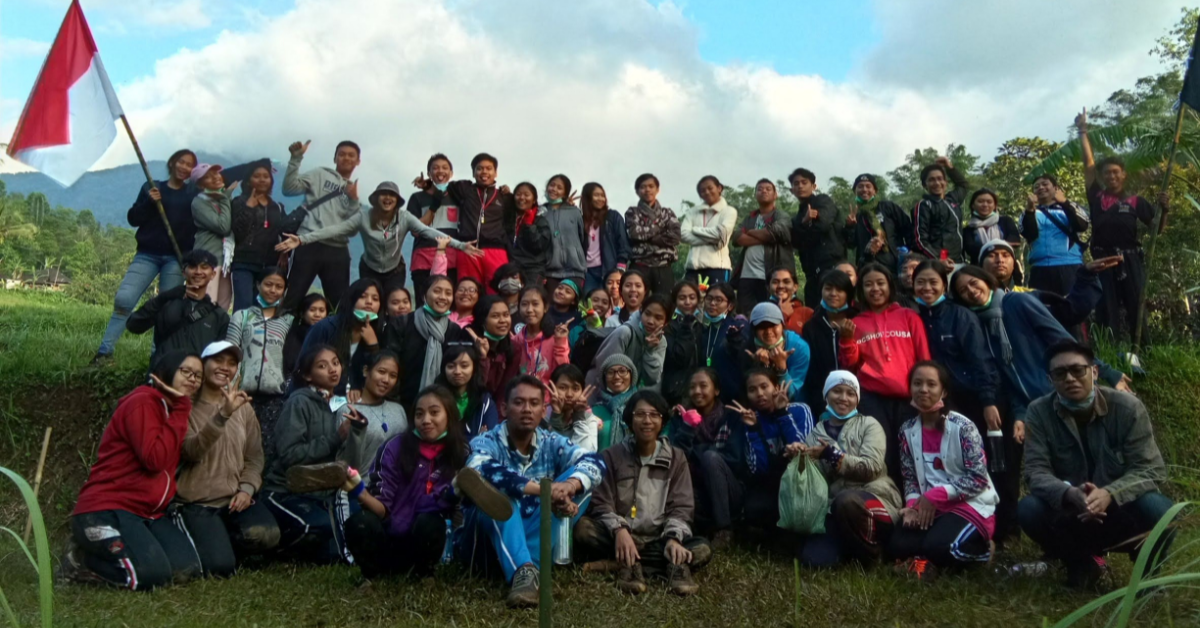
Originally written in 2018, when I was still in college. Reading this again years later, I realized how much has changed, and how much hasn’t.
Looking back, college wasn’t only about lectures, assignments, exams, and trying to figure out what I wanted to do with my life. Some of my most meaningful memories happened outside the classroom, often in places I wouldn’t have visited otherwise.
One of those places was Jatiluwih.
If you’re familiar with Bali, you probably already know Jatiluwih for its famous rice terraces. Located in Tabanan, the village is surrounded by layers of green rice fields stretching across the landscape. In 2012, the area became part of the UNESCO World Heritage site recognition of Bali’s Subak landscape.
But back then, I wasn’t visiting Jatiluwih as a tourist.
I was going there almost every Saturday to teach English.
How I Ended Up Teaching in Jatiluwih
During college, I joined SEC, or STIBA English Club (now Sustainable Education Community), a community organization on campus. We met regularly every Saturday, but our activities went beyond learning English for ourselves.
We taught English to children in remote villages.
One of our teaching programs took place in Jatiluwih, where we worked with students from SD 1, SD 2, and SD 3 Jatiluwih.

There were quite a lot of SEC members in my batch, so we were divided into smaller teams for each school. Each team had around six or seven facilitators, and our teaching system was based on what we called the “small circle.”
The students were divided into smaller groups, with facilitators assigned to each one. We would spend around 15 minutes learning together before returning to the classroom for a larger review session.

But teaching wasn’t simply about standing in front of a classroom and explaining vocabulary.
We wanted the kids to have fun, too.
Learning Didn’t Always Look Like Studying
Our Saturday sessions were filled with different activities.
We had an Imagination session, where one facilitator would ask the children to close their eyes and imagine different things before we started learning.

Then came the English teaching session, where we reviewed what we’d discussed in our small circles and made sure everyone was following along.
After that, we’d have a little break and some food before moving on to Games.
One of my favorite parts was Storytelling.
The facilitator would tell a story in Indonesian while introducing English words and phrases along the way. Whenever an English word appeared, the children would be asked what it meant. Sometimes they would act out parts of the story, and the facilitators would join them.
It wasn’t the kind of English lesson I remembered from school.
And I think that was the point.
Learning didn’t always have to feel like studying.
We also had Diary/Daily Writing, where the students could write about their day and whatever was on their minds. Then we’d end the day with Reflection, where everyone expressed gratitude and thanked one another for being there.
Eventually, we’d gather in a circle and sing Laskar Pelangi by Nidji while walking clockwise.
Then it was time to go home.
Teaching Wasn’t as Easy as It Looked
Of course, reading about it now makes everything sound rather straightforward.
It wasn’t.
Teaching children requires a lot of patience. Every child has a different personality, a different way of learning, and a different level of confidence. Some were enthusiastic and eager to participate, while others needed more encouragement.

I quickly learned that knowing something wasn’t enough. You also had to know how to explain it to someone who didn’t know it yet.
And sometimes, that was harder than learning the material yourself.
There was also the small matter of getting to Jatiluwih.
Most of us lived in Denpasar, which meant the journey could take around two hours. Because our teaching sessions were on Saturday mornings, some of us would travel on Friday night and stay at our mentor’s house, while others would leave early Saturday morning.
I usually preferred staying over.
It meant we didn’t have to worry about waking up ridiculously early or getting caught in traffic. It also gave us a little more time together before another busy Saturday.
After discussing our plans for the next day and packing our bags, we’d sometimes stay up a little longer.
Billiards at Warung Wayan.
A few rounds of Uno or Remi.

Just hanging out until we were finally tired enough to sleep.
The nights in Jatiluwih were freezing, at least to someone used to Denpasar. I remember needing three blankets just to feel warm enough to sleep.
And then morning would come.
Waking Up in Jatiluwih
This was probably my favorite part.
The landscape looked completely different from what I was used to seeing in Denpasar.
The rice fields stretched across the hills, surrounded by greenery and fresh mountain air. Everything felt quieter. Even the mornings seemed to move more slowly.

I wanted to take pictures of everything.
Back then, I probably took way too many.
But even with all the photos, I don’t think a camera could fully capture what it felt like to wake up there.
The water was another thing I remember.
The river water was incredibly clear compared to what I was used to seeing around Denpasar. It felt almost surreal. We could even drink water straight from the tap.
I remember thinking, if only the water in Denpasar were this clean.
Maybe we could save quite a bit of money every month.
Some thoughts apparently never change.
Why We Kept Coming Back
Looking back, I think all of us had different reasons for joining SEC.
For some, it was about improving their English. For others, it was about gaining experience or simply being part of something outside college.
For me, teaching gradually became something more meaningful.
There’s something special about sharing knowledge.
Once you have something that could help someone else, keeping it to yourself doesn’t really make much sense.
And perhaps that’s what kept us going even when the journey was long, the mornings were early, the weather wasn’t always kind, and the teaching itself could be exhausting.
We knew why we were there.
We weren’t just teaching English.
We were giving the kids another opportunity to learn, to express themselves, and perhaps to imagine something beyond what they already knew.
And in the process, we were learning too.
What I Took Away From Those Saturdays
I don’t remember every lesson we taught.
I don’t remember every game we played.
I definitely don’t remember every English word we introduced.
But I remember the feeling.

I remember the long rides to Jatiluwih. The cold nights. Sleeping under too many blankets. Laughing with friends before bed. Waking up to those beautiful rice fields. Standing in front of a group of children and trying to figure out how to make them understand something that seemed so simple to me.
Most importantly, I remember realizing that teaching isn’t simply about having more knowledge than someone else.
It’s about making that knowledge useful.
At the time, I used to imagine what those children might be like five, ten, or even twenty years later. Maybe some of them would become teachers themselves. Maybe they’d work in places they’d never imagined. Maybe they’d remember the Saturdays when a group of college students from Denpasar came to their village to teach them English.
Or maybe they wouldn’t remember us at all.
And that’s okay.
We don’t always get to know what impact we have on someone else’s life.
Sometimes, we simply do our part and move on.
Years later, I still hope that somewhere along the way, something we shared stayed with them.
Even if it was only a small thing.
Because when I think about my college years now, I realize that some of the lessons I remember most weren’t taught inside a classroom.

They happened on the road to Jatiluwih, on Saturday mornings, surrounded by rice fields and a group of children who reminded me that learning can go both ways.
I went there thinking I was there to teach.
Looking back, I think I was a student too.